



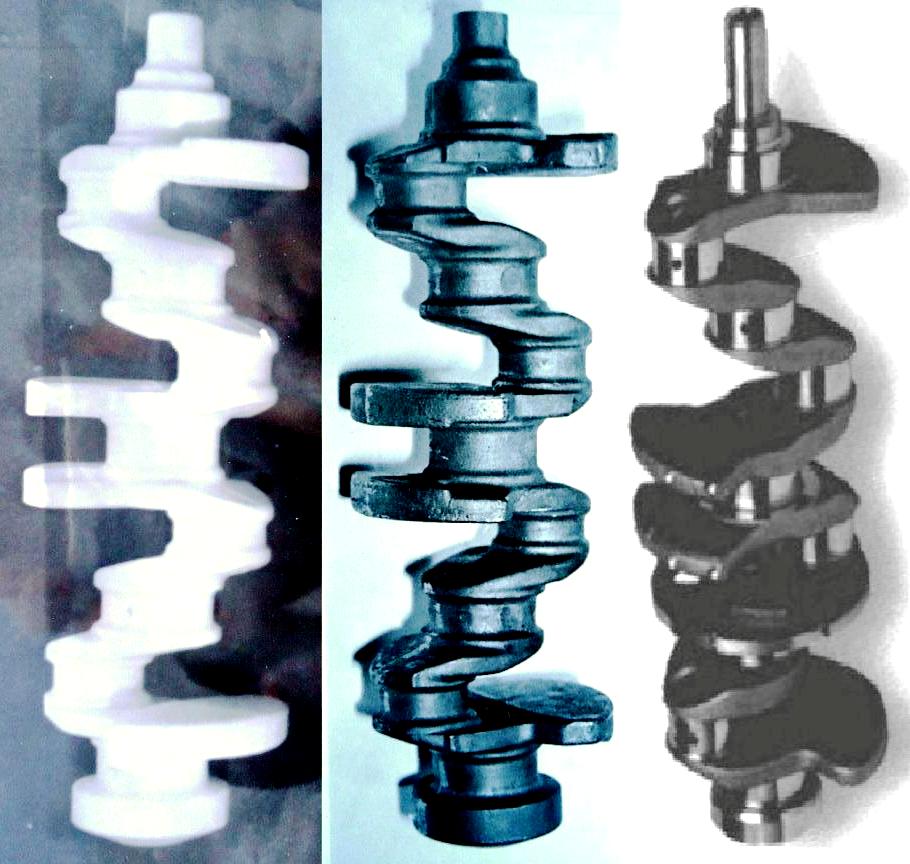
Metal casting through foam models - high accuracy and low cost of castings.
Modeling of decorative and technical products from foam, as well as press form.
Engineering growth in proportionly increases the consumption of castings, the world production volume of which in 2015 reached 104.13 million tons. The more the country produces castings, the more machines and mechanisms, and vice versa. Up to 80% of metals are obtained in sand forms (including special casting, which retains the relevance of the development of the foundry technology, taking into account the growing requirements of the ecology. In the foundry, the most accurate castings can be obtained by one -time models. If, when casting in sand forms, one -time forms are used, now they are poured along one -time models from foam. They look like a packaging from a TV, or a one -time food plate, which are massively stamped on machine guns, and the outer walls of the houses are insulated with polystyrene foams.
according to the same technology (as for packaging) for a series of castings, the models are blocked by the peno polystyrene granules into aluminum press forms (multi-seater for small models), followed by foaming granules with heating press forms for about 3 minutes. For one-time and large castings (weighing up to several tons), the models are cut out of foam slabs with heated nichrome wire through templates or on mock-milling machines (3D milling). The model and the casting obtained on it have high accuracy and competitive presentation.
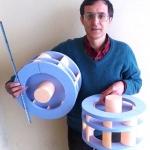
You can freely see the voluminous prototype of the casting in the model, measure its walls, which, with ordinary molding for complex castings with several rods, cannot be made. The model of polystyrene is easier than casting from cast iron by 300 times, take the model in your hands - as if you are holding a void, which then turns into a metal. Typically, the founders are not used to this, stereotypes laid down at the institute, do not allow to see new casting opportunities. Foam models are covered with paint with refractory powder, glued with a gate, covered with dry sand in a box (container) and poured with metal. When pouring, the metal evaporates the model and replaces it with itself. So that the model does not smoke into the workshop when pouring, the gas pump is sucked out of the container-the vacuum supports about half the atmosphere (the household vacuum cleaner gives up to 0.3 atm). There are no stinks of burners, there are no bays according to the form of the shapes (there is no connector) and the displacement of the rods and shapes during assembly, because there are no rods themselves with all the problems of their production and knocking out.
Production sites: model, molding, melting, treatment plants are equipped with simple equipment. The entire molding consists of backfilling models with dry sand on Vibrostol (without massive high -precision pressing machines, shaking, assemblies of forms, pneumatic reference, runners). The emphasis of attention was transferred to the production of models - these “lightest white toys” with a density of about 25 kg/cubic meter. Models consist of approximately 97.5% of air and 2.5% of polystyrene, such production is usually “trusted” by female hands, placing model sites on the second and above the floors of buildings. Labor similar to the packaging displaces the image of the foundry, like a small mine.
The revolutionary cooling of the sand after rash from the forms is carried out in passage cooler - in air -flow or drum, as a rule, mounting them with bunkers outside the workshop (sand is not afraid of frost). For black and colored alloys, the same domestic equipment is used (in contrast to traditional forming with the binder, when high -quality equipment is imported to it). So they receive castings from cast iron and became all types, bronze, brass and aluminum of all brands. In a box on a “Christmas tree or a bush” dozens of castings immediately pour, as in jewelry production.
Workshops and sites with this flexible technology are rapidly multiplying around the world - from America to China, in auto and instrumentation, Ford Motors, Fiat, General Motors, etc., several hundred patents for inventions - and their stream grows. Today, in the world, it produce castings of ~ 2 million tons/year, forecasts for the near future give this technology 10-20% of world casting. Institute of Foms, Kyiv , designed the equipment and launched a number of shops of plots.
Low costs for model -forming materials (1 ton of fitness consumes four types: quartz sand - 50 kg, anti -tips - 25 kg, polystyrene foam - 6 kg and polyethylene film - 10 sq.m., no in the binder sand) save at least 100 dollars/t of casting along the entire volume of the container. 70-80%, savings in the width of metal by 250-300 kg, electricity 100-150 kWh, masses of castings by 10-20% compared to traditional outrageous molding. Large savings provide casting complex castings from wear -resistant steels (screws for brick, beat, hammers and details of the crushing