











Key Findings:
- Hybrid vehicles now account for 14.5% of the market, beating BEVs by 5.1%, reflecting consumer preferences for fuel economy without a full commitment to electric vehicles.
- OEMs are recalibrating investments, with more than $234 billion spent since 2020, but recent trends favor hybrids and ICE platforms, as exemplified by Honda's stalled EV expansion.
- Automakers are expanding battery use beyond vehiclesto energy storage markets, capitalizing on rising U.S. electricity demand and seeking to optimize battery capacity amid slowing EV growth.
Demand for electric vehicles (EVs) in North America is entering a more challenging and uneven phase with slowing adoption of battery electric vehicles (BEVs), rising hybrid penetration and strategic recalibration by automakers changing the outlook for OEMsi (OEM).
Recent policy changes, evolving consumer preferences and cost pressures are converging to challenge earlier assumptions about rapid electrification, prompting OEMs to reconsider product portfolios, capital allocation and even the role of batteries outside of vehicles.
Policy shifts are changing the trajectory of electric vehicles
A key factor in the changing demand profile is a marked shift in US policy direction that has weakened the momentum to achieve full adoption of battery electric vehicles while increasing flexibility for OEMs.
Changes in EV incentives, infrastructure funding and regulation
Key Findings:
- Hybrid vehicles currently account for 14.5% of the market, beating EVs by 5.1%, reflecting consumer preference for fuel economy without a full commitment to EVs.
- OEMs reconsider investments: since 2020, more than$234 billion, but recent trends favor hybrids and the ICE platform, as exemplified by Honda's halt to its electric vehicle expansion.
- Automakers are expanding battery use outside of vehiclesto energy storage markets, taking advantage of rising U.S. electricity demand and seeking to optimize battery capacity amid slowing growth in electric vehicles.
Demand for electric vehicles (EVs) in North America is entering a more challenging and challenging period. uneven phase with slowing adoption of battery electric vehicles (BEVs), rising hybrid penetration and automakers' strategic recalibration are changing the outlook for original equipment manufacturers (OEMs).
Recent policy changes, evolving consumer preferences, and pricing pressures are challenging previous assumptions about rapid electrification, prompting OEMs to reassess product portfolios, capital allocation, and even the role of batteries outside of vehicles.
Changes in politics they are changing the development trajectory of electric vehicleslei
A key factor in the changing demand profile is a marked shift in U.S. policy direction, which has weakened the momentum for full adoption of battery electric vehicles while increasing flexibility for OEMs.
Changes in EV incentives, infrastructure funding and regulatory frameworks represent “almost a complete shift in direction,” according to Elizabeth Crear, president and CEO of the Center for Automotive Research.
“Changes in policy such scale creates greater flexibility for OEMs to re-evaluate their product portfolios and better align future investments with actual customer demand,” Crear said.
This has had a measurable impact on market composition. Hybrid vehicles currently hold 14.5% of the U.S. market share, while BEVs have fallen to 5.1% after peaking at 7.8% in 2024.
Electrified vehicles overall, including hybrids, plug-in hybrids and BEVs, represent about 20% of the market, while vehicles with internal combustion enginesearly combustion engines (ICE) account for 80% of the share.
This shift reflects both political signals and a more cautious consumer base. Consumers are seeking better fuel economy without having to commit to charging [electric vehicle], Crear said.
Hybrid growth offsets BEV slowdown
Data shows a clear divergence between demand trajectories for hybrid models and BEVs.
"What's interesting is that the only powertrain to gain traction in sales is the hybrid. Sales of all other powertrain types are installations are down year-over-year,” Crear said.
For OEMs, these dynamics are changing product strategies. Hybrid growth provides a short-term path to decarbonization while maintaining flexibility in powertrain development and supply chains.
At the same time, price dynamics are influencing material selection and manufacturing strategies. According to industry sources, cars costing less than $60,000 are "more likely to replace steel with aluminum for fenders and hoods, thanks in part to advances in oarea of high-strength steels."
This trend has implications not only for vehicle design, but also for supply chains, as hybrid models may support demand for traditional materials even as electrification progresses.
The outlook for auto demand is stabilizing, but below previous expectations
Despite weaker BEV performance, overall North American auto demand remains relatively resilient, albeit slightly lower previous forecasts.
U.S. passenger vehicle sales reached about 16 million units in 2025, with forecasts for 2026 at about 15.7 million units, a slight decline of 300,000 vehicles.
Hybrid growth could help offset some of the expected slowdown Industry participants suggest that increased hybrid penetration could keep overall demand broadly stable year-over-year rather than causing more. sharp decline.
However, long-term expectations for BEV adoption are adjusted downward. “Year after year, industry experts continue to lower [full battery] forecasts for adoption.electric vehicle industry, and frankly, I believe that even the current forecast of 16% market share by 2030 may still be overstated,” Crear said.
This re-estimation is forcing OEMs to reconsider the pace and scale of investments in electrification in North America.
OEMs are rethinking investment strategies
The changing demand environment is already leading to strategic changes across the entire auto sector, with OEMs rebalancing capital allocation between electric vehicles, hybrids and ICE technologies.
Since 2020, automakers have announced more than $234 billion in investments across North America, with 77% in the US, 13% in Canada and 9% in Mexico However, recent trends point to a growing shift back to ICE and hybrid. platforms.
Honda's decision to halt its expansion of electric vehicle production in North America underscores the scale of this recalibration.
"Based on our assessment that the viability of the electric vehicle business is not currently guaranteed, we have decided to suspend somecertain plans, particularly in North America," said Honda Motor Fujimura, president, chief executive officer and director, during the company's earnings call for the fiscal year ended March 31, 2026.
The Japanese automaker has canceled the launch and development of several electric vehicle models planned for the region while pivoting toward hybrids and prioritizing "robust earnings from the ICE business."
Trade and pricing pressures complicate the economy electric vehicles
Automakers operating in North America face a combination of steel tariffs, auto import duties and anti-dumping measures that increase the cost base of both electric vehicle and conventional vehicle production.
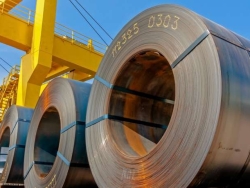
According to the U.S. Federal Register, in April the U.S. Commerce Department gave Honda a weighted-average dumping margin on hot-rolled coil of 13.07%.
At the same time, the uncertainty surrounding the revision of the United States-Mexico-Canada Agreement (USMCA) further complicates the situation for market participants.There will be a more fragmented trading environment, with tariffs playing a larger role than in previous agreements.
"Free trade - forget it; there will be tariffs," Oscar del Cueto, president of the American Chamber of Commerce in Mexico (AmCham Mexico) and Canada Pacific in Kansas City, Mexico, said May 5 at the Council of the Americas conference.
Such dynamics reinforce the importance of localization strategies. "From a tariff action perspective, we continue to believe that local manufacturing remains a meaningful initiative," Honda management said.
For OEMs, this adds another layer to EV investment decisions, especially as battery, component and raw material supply chains remain globally interconnected.
Understand current steel price trends and access hundreds of historical steel prices in one place. Find out more about Fastmarkets steel prices here.
Battery strategy goes beyond vehicles
As demand growth for electric vehicles slows and capacity utilization declines,OEMs are also rethinking how to use battery assets more productively.
Ford's launch of a dedicated energy storage business illustrates a broader shift across the sector as OEMs seek to repurpose excess battery capacity and diversify revenue streams.
The move reflects a widening gap between previous assumptions about electric vehicles and the current market reality, where demand growth has slowed, subsidy support has become less reliable, and large-scale battery investments are currently underutilized.
Energy storage provides a more stable and contractual demand profile, with projects often backed by long-term agreements and recurring revenue through service and performance guarantees.
In parallel, U.S. electricity demand is growing, driven by data centers, industrial activity and the expansion of renewables. This increases the need for battery storage solutions and creates new opportunities for OEMs.As a result, batteries are increasingly being seen less as vehicle-specific components and more as flexible assets within the broader energy ecosystem.
The key question is no longer how many electric vehicles an automaker can sell, but how effectively it can use its battery capacity in an evolving energy market.
Implications for North American OEMs
Collectively, these trends point to a more nuanced and less linear path to electrification in North America.
Several strategic priorities emerge for OEMs:
- Powertrain balancing:Hybrid vehicles are likely to play a growing role as a bridge technology, offering emissions reductions without being completely reliant on charging infrastructure
- Managing demand uncertainty:Slower BEV adoption requires more flexible production planning and careful capital allocation
- Optimizing battery usage:Expansion into energy storage and related markets could improve returns on existing investments
- Navigating trade dynamics:Tariffs and localization requirements will remain central to cost competitiveness and supply chain design
For North American OEMs, adaptation to changing demand will be critical to maintaining competitiveness and protecting profits in an increasingly complex market.
Get a clearer understanding of the evolving EV and hybrid landscape in North America with Fastmarkets automotive data and analytics solutions.
Key Findings:
- Hybrid vehicles currently account for 14.5% of the market, outperforming electric vehicles by 5.1%, reflecting consumer preference for fuel economy without a full commitment to electric vehicles.
- OEMsinvestments are being looked atWith more than $234 billion spent since 2020, recent trends favor hybrids and the ICE platform, as exemplified by Honda's halt to its EV expansion.
- Automakers are expanding the use of batteries outside of vehiclesinto energy storage markets, taking advantage of rising U.S. electricity demand and seeking to optimize battery capacity amid slowing EV growth.
Demand electric vehicles (EV) in North America is entering a more challenging and uneven phase with slowing adoption of battery electric vehicles (BEVs), rising hybrid penetration and automakers' strategic recalibration are changing the outlook for original equipment manufacturers (OEMs).
Recent policy changes, evolving consumer preferences, and pricing pressures are challenging previous assumptions about rapid electrification, prompting OEMs to reevaluate product portfolios, capital allocation, and even role batteries outside of vehicles.
Policy changes are altering the trajectory of electric vehicle development
A key factor in the changing demand profile is a marked shift in U.S. policy direction, which has weakened the momentum for full adoption of battery electric vehicles while increasing flexibility for OEMs.
Changes in EV incentives, infrastructure funding and regulatory frameworks represent “almost a complete shift in direction,” according to Elizabeth Crear, president and CEO of the Center for Automotive. research.
“Policy changes of this magnitude create greater flexibility for OEMs to re-evaluate their product portfolios and better align future investments with actual customer demand,” Crear said.
This has had a measurable impact on market composition. Hybrid vehicles currently hold 14.5% of the US market share, while BEVs have fallen to 5.1% after peaking at 7.8% in 2024.
Electrified vehicles in general, including hybrids, plug-in hybrids and BEVs, arehave about 20% of the market, while internal combustion engine (ICE) vehicles have an 80% share.
The shift reflects both political signals and a more cautious consumer base. Consumers are seeking better fuel economy without having to commit to charging [electric vehicle], Crear said.
Hybrid growth offsets BEV slowdown
Data shows a clear divergence between demand trajectories for hybrid models and BEVs.
"What's interesting is that the only powertrain to gain traction in sales is the hybrid. Sales of all other powertrain types are installations are down year-over-year,” Crear said.
For OEMs, these dynamics are changing product strategies. Hybrid growth provides a short-term path to decarbonization while maintaining flexibility in powertrain development and supply chains.
At the same time, price dynamics are influencing material selection and manufacturing strategies. Vehicles costing less than $60,000 are "more likely to be replaced withaluminum for fenders and hoods, thanks in part to advances in high-strength steels."
This trend has implications not only for vehicle design but also for supply chains, as hybrid models could support demand for traditional materials even as electrification progresses.
The outlook for auto demand is stabilizing, but below previous expectations
Despite weaker BEV performance, overall auto demand in North America remains relatively strong, although slightly below previous forecasts.
U.S. passenger vehicle sales reached about 16 million units in 2025, with forecasts for 2026 at about 15.7 million units, a slight decline of 300,000 vehicles.
Hybrid growth could help offset some of the expected slowdown. Industry participants suggest increased hybrid penetration could. keep overall demand broadly stable year over year rather than causing a sharper decline.
However, long-term expectations for BEV adoption are being adjusted downward "From g.Every year, industry experts continue to lower [full battery] their EV adoption forecasts, and frankly, I believe that even the current forecast of 16% market share by 2030 may still be too high," Crear said.
This re-estimation is forcing OEMs to reconsider the pace and scale of investments in electrification in North America.
OEMs are reconsidering Investment Strategies
The changing demand environment is already driving strategic changes across the auto sector, with OEMs rebalancing capital allocation between electric vehicles, hybrids and combustion engine technologies.
Since 2020, automakers have announced more than $234 billion in investments across North America, with 77% in the U.S., 13% in Canada and 9% in Mexico. However, recent trends indicate a growing shift back to ICE and hybrid platforms.
Honda's decision to halt EV expansion in North America underscores the scale of this recalibration.
"Based on our assessment that the viability of the EV businessvehicles are not guaranteed at this time, we have decided to pause some plans, particularly in North America,” said Honda Motor Fujimura, president, chief executive officer and director, during the company's earnings call for the fiscal year ended March 31, 2026.
The Japanese automaker has canceled the launch and development of several electric vehicle models planned for the region, while pivoting toward hybrids and prioritizing "robust earnings from the ICE business."
Trade and pricing pressures complicate the economics of electric vehicles
Automakers operating in North America face a combination of steel tariffs, auto import duties and anti-dumping measures that increase the cost base of both electric vehicle and conventional vehicle production.
In April, the U.S. Commerce Department gave Honda a weighted-average dumping margin on hot-rolled steel, according to the U.S. Federal Register. roll of 13.07%.
At the same time, uncertainty surrounding the revision of the United States-Mexico-Canada Agreementth (USMCA) further complicates the situation. Market participants increasingly expect a more fragmented trading environment, with tariffs playing a larger role than in previous agreements.
"Free trade - forget it; there will be tariffs," Oscar del Cueto, president of the American Chamber of Commerce in Mexico (AmCham Mexico) and Canada Pacific Kansas City, Mexico, said May 5 at the Council of the Americas conference.
Such dynamics reinforce the importance of localization strategies. "From a tariff action perspective, we continue to believe that local manufacturing remains a meaningful initiative," Honda management said.
For OEMs, this adds another layer to EV investment decisions, especially as battery, component and raw material supply chains remain globally interconnected.
Understand current steel price trends and access hundreds of historical steel prices in one place. Find out more about Fastmarkets steel prices here.
Battery strategy extends beyond vehicles
As growthAs electric vehicle demand slows and capacity utilization declines, automakers are also rethinking how to use battery assets more productively.
Ford's launch of a dedicated energy storage business illustrates a broader shift across the sector as OEMs seek to repurpose excess battery capacity and diversify revenue streams.
The move reflects a widening gap between previous assumptions about electric vehicles and the current market reality of rising demand. has slowed, subsidy support has become less reliable, and large-scale battery investments are currently underutilized.
Energy storage provides a more stable and contractual demand profile, with projects often backed by long-term agreements and recurring revenue through service and performance guarantees.
In parallel, U.S. electricity demand is growing, driven by data centers, industrial activity and the expansion of renewables. This increases the need for solutions forbattery storage and creates new opportunities for OEMs.
As a result, batteries are increasingly seen not as vehicle-specific components, but as flexible assets within the broader energy ecosystem.
The key question is no longer how many electric vehicles an automaker can sell, but how effectively it can use its battery capacity in an evolving energy market.
Implications for North American OEMs
Collectively, these trends point to a more nuanced and less linear electrification path in North America.
Several strategic priorities emerge for OEMs:
- Powertrain balancing: Hybrid vehicles are likely to play a growing role as a bridge technology, offering emissions reductions without complete dependence on charging infrastructure
- Managing demand uncertainty:Slower BEV adoption requires moreFlexible production planning and prudent capital allocation
- Optimizing the use of batteries:Expansion in energy storage and related markets can improve the returns on existing investments
- Navigating trade dynamics:Tariffs and localization requirements will remain central to cost competitiveness and supply chain design
For For North American OEMs, adapting to changing demand will be critical to maintaining competitiveness and protecting profits in an increasingly challenging market.
Get a clearer understanding of the evolving EV and hybrid landscape in North America with Fastmarkets automotive data and analytics solutions.
Key Findings:
- Hybrid vehicles currently account for 14.5% of the market, beating electric vehicles by 5.1%Reflecting consumer preference for fuel economy without a full commitment to eelectric vehicles.
- OEMs are reconsidering investmentsWith more than $234 billion spent since 2020, recent trends favor hybrids and the ICE platform, as exemplified by Honda's halt to its EV expansion.
- Automakers are expanding the use of batteries outside of vehiclesinto energy storage markets, taking advantage of rising U.S. electricity demand and seeking to optimize capacity batteries amid slowing electric vehicle growth.
Electric vehicle (EV) demand in North America is entering a more challenging and uneven phase with slowing battery electric vehicle (BEV) adoption, rising hybrid penetration and automakers' strategic recalibration are changing the outlook for original equipment manufacturers (OEMs).
Recent policy changes, evolving consumer preferences, and pricing pressures are challenging previous assumptions about rapid electrification, prompting OEMs reevaluate product portfolios, capital allocationand even the role of batteries outside of vehicles.
Policy changes are altering the trajectory of electric vehicle development
A key driver of the changing demand profile is a marked shift in US policy direction, which has weakened the momentum for full adoption of battery electric vehicles while increasing flexibility for OEMs.
Changes in EV incentives, infrastructure funding and regulatory frameworks represent “almost a complete shift in direction,” according to Elizabeth Crear. President and CEO of the Center for Automotive Research.
“Policy changes of this magnitude create greater flexibility for OEMs to re-evaluate their product portfolios and better align future investments with actual customer demand,” Crear said.
This has had a measurable impact on market composition. Hybrid vehicles currently hold 14.5% of the US market share, while BEVs have fallen to 5.1% after peaking at 7.8% in 2024.
Electrified vehiclesVehicles overall, including hybrids, plug-in hybrids and BEVs, represent about 20% of the market, while internal combustion engine (ICE) vehicles have an 80% share.
The shift reflects both political signals and a more cautious consumer base. Consumers are seeking better fuel economy without having to commit to charging [electric vehicle], Crear said.
Hybrid growth offsets BEV slowdown
Data shows a clear divergence between demand trajectories for hybrid models and BEVs.
"What's interesting is that the only powertrain to gain traction in sales is the hybrid. Sales of all other powertrain types are installations are down year-over-year,” Crear said.
For OEMs, these dynamics are changing product strategies. Hybrid growth provides a short-term path to decarbonization while maintaining flexibility in powertrain development and supply chains.
At the same time, price dynamics are influencing material selection and manufacturing strategies. According to industry sources, autosub-$60,000 models are "more likely to replace steel with aluminum for fenders and hoods, thanks in part to advances in high-strength steels."
This trend has implications not only for vehicle design but also for supply chains, as hybrid models could support demand for traditional materials even as electrification progresses.
The outlook for auto demand is stabilizing, but below previous expectations
Despite weaker BEV performance, overall North American vehicle demand remains relatively strong, albeit slightly below previous forecasts.
U.S. passenger vehicle sales reached about 16 million units in 2025, with forecasts for 2026 at about 15.7 million units, a slight decline of 300,000 vehicles.
Hybrid growth could help offset some of the expected slowdown. Industry participants suggest that increased hybrid penetration could keep overall demand broadly stable year-on-year rather than causing a sharper decline.
However, debtBEV adoption expectations are adjusted downward. “Year after year, industry experts continue to downgrade [full battery] EV adoption forecasts, and frankly, I believe that even the current forecast of 16% market share by 2030 may still be too high,” Crear said.
This re-estimation is forcing OEMs to reconsider the pace and scale of investments in electrification in North America.
OEMs are reconsidering. Investment Strategies
The changing demand environment is already driving strategic changes across the auto sector, with OEMs rebalancing capital allocation between electric vehicles, hybrids and combustion engine technologies.
Since 2020, automakers have announced more than $234 billion in investments across North America, with 77% in the U.S., 13% in Canada and 9% in Mexico. However, recent trends point to a growing shift back to ICE and hybrid platforms.
Honda's decision to halt EV expansion in North America underscores the scale of this recalibration.
"Exodus"In our assessment that the viability of the electric vehicle business is not guaranteed at this time, we have decided to pause certain plans, particularly in North America," said US Honda Motor Fujimura President, CEO and Director during the company's earnings call for the fiscal year ended March 31, 2026.
The Japanese automaker has canceled the launch and development of several electric vehicle models planned for the region, while pivoting toward hybrids and prioritizing "robust revenues from ICE business."
Trade and pricing pressures complicate the economics of electric vehicles
Automakers operating in North America face a combination of steel tariffs, auto import duties and anti-dumping measures that increase the cost base of both electric vehicle and conventional vehicle production.
In April, the U.S. Commerce Department gave Honda a weighted-average dumping rating, according to the U.S. Federal Register. margin on hot rolled coil of 13.07%.
At the same time,tensions surrounding the renegotiation of the United States-Mexico-Canada Agreement (USMCA) further complicate matters. Market participants increasingly expect a more fragmented trading environment, with tariffs playing a larger role than in previous agreements.
"Free trade - forget it; there will be tariffs," Oscar del Cueto, president of the American Chamber of Commerce in Mexico (AmCham Mexico) and Canada Pacific Kansas City, Mexico, said May 5 at the Council of the Americas conference.
Such dynamics reinforce the importance of localization strategies. "From a tariff action perspective, we continue to believe that local manufacturing remains a meaningful initiative," Honda management said.
For OEMs, this adds another layer to EV investment decisions, especially as battery, component and raw material supply chains remain globally interconnected.
Understand current steel price trends and access hundreds of historical steel prices in one place. Find out more about Fastmarkets steel prices here.
Battery strategy comes outand vehicle frameworks
As growth in demand for electric vehicles slows and capacity utilization declines, automakers are also rethinking how to use battery assets more productively.
Ford's launch of a dedicated energy storage business illustrates a broader shift across the sector as OEMs seek to repurpose excess battery capacity and diversify revenue streams.
The move reflects a widening gap between the former. assumptions about electric vehicles and the current market reality where demand growth has slowed, subsidy support has become less reliable, and large-scale battery investments are currently underutilized.
Energy storage provides a more stable and contractual demand profile, with projects often backed by long-term agreements and recurring revenue through service and performance guarantees.
In parallel, US electricity demand is growing, driven by data centers, industrial activity and expansion resumescontrolled energy sources. This is increasing the need for battery storage solutions and creating new opportunities for OEMs.
As a result, batteries are increasingly seen less as vehicle-specific components and more as flexible assets within the broader energy ecosystem.
The key question is no longer how many electric vehicles an automaker can sell, but how effectively it can use its battery capacity in an evolving energy market.
Implications for North American OEMs
Collectively, these trends point to a more nuanced and less linear electrification path in North America.
Several strategic priorities emerge for OEMs:
- Powertrain balancing: Hybrid vehicles are likely to play a growing role as a bridge technology, offering emissions reductions without complete dependence on charging infrastructure
- Management uncertaindemand:Slower BEV adoption requires more flexible production planning and careful capital allocation
- Optimizing battery use:Expansion into energy storage and related markets could improve returns on existing investments
- Navigating trade dynamics:Tariffs and localization requirements will remain central to cost competitiveness and supply chain design
For North American OEMs, adapting to changing demand will be critical to maintaining competitiveness and protecting profits in an increasingly complex market.
Get a clearer picture of the evolving EV and hybrid space in North America with Fastmarkets' automotive data and analytics solutions.
Key Findings:
- Hybrid vehicles currently account for 14.5% of the market, beating electric vehicles by 5.1%, reflecting preferencese consumers regarding fuel economy without a full commitment to electric vehicles.
- OEMs are reconsidering investments: More than $234 billion has been spent since 2020, but recent trends favor hybrids and the ICE platform, as exemplified by the end of Honda's EV expansion.
- Automakers are expanding the use of batteries outside of vehiclesinto energy storage markets, taking advantage of growing demand for electricity in the US and seeking to optimize battery capacity amid slowing growth of electric vehicles.
Demand for electric vehicles (EVs) in North America is entering a more challenging and uneven phase with slowing adoption of battery electric vehicles (BEVs), rising hybrid penetration and strategic recalibration of automakers are changing the outlook for original equipment manufacturers (OEMs).
Recent policy changes, evolving consumer preferences and pricing pressures are challenging previous assumptions of rapid electrification, encouraging OEM manufacturers are re-evaluating product portfolios, capital allocation and even the role of batteries outside of vehicles.
Policy changes are altering the trajectory of EVs
A key factor in the changing demand profile is a marked shift in US policy direction, which has weakened the momentum for full adoption of battery electric vehicles while increasing flexibility for OEMs.
Changes in EV incentives, infrastructure funding and regulatory frameworks The base represents "almost a complete change of direction," according to Elizabeth Crear, president and CEO of the Center for Automotive Research.
"Policy changes of this magnitude create greater flexibility for OEMs to re-evaluate their product portfolios and better align future investments with actual customer demand," Crear said.
This has had a measurable impact on the composition of the market. Hybrid vehicles currently hold 14.5% of the US market share, while BEVs have fallen to 5.1% after theica at 7.8% in 2024.
Electrified vehicles overall, including hybrids, plug-in hybrids and BEVs, represent about 20% of the market, while internal combustion engine (ICE) vehicles take 80% of the share.
This shift reflects both policy signals and a more cautious consumer base. Consumers are seeking better fuel economy without having to commit to charging [electric vehicle], Crear said.
Hybrid growth offsets BEV slowdown
Data shows a clear divergence between demand trajectories for hybrid models and BEVs.
"What's interesting is that the only powertrain to gain traction in sales is the hybrid. Sales of all other powertrain types are installations are down year-over-year,” Crear said.
For OEMs, these dynamics are changing product strategies. Hybrid growth provides a short-term path to decarbonization while maintaining flexibility in powertrain development and supply chains.
At the same time, price dynamics are influencing material choicesin and production strategies. According to industry sources, cars priced under $60,000 are "more likely to replace steel with aluminum for fenders and hoods, thanks in part to advances in high-strength steels."
This trend has implications not only for vehicle design but also for supply chains, as hybrid models could support demand for traditional materials even as electrification progresses.
The outlook for auto demand is stabilizing, but lower. previous expectations
Despite weaker BEV performance, overall North American vehicle demand remains relatively strong, albeit slightly below previous forecasts.
U.S. passenger vehicle sales reached about 16 million units in 2025, with forecasts for 2026 at about 15.7 million units, a slight decline of 300,000 cars.
Hybrid growth could help offset some of the expected slowdown. Industry participants suggest that increased hybrid penetration could keep overall demand broadly stable year-on-year.d rather than causing a sharper decline.
However, long-term expectations for BEV adoption are being adjusted downward. “Year after year, industry experts continue to downgrade [full battery] EV adoption forecasts, and frankly, I believe that even the current forecast of 16% market share by 2030 may still be too high,” Crear said.
This re-estimation is forcing OEMs to reconsider the pace and scale of investments in electrification in North America.
OEMs are reconsidering. Investment Strategies
The changing demand environment is already driving strategic changes across the auto sector, with OEMs rebalancing capital allocation between electric vehicles, hybrids and combustion engine technologies.
Since 2020, automakers have announced more than $234 billion in investments across North America, with 77% in the U.S., 13% in Canada and 9% in Mexico. However, recent trends indicate a growing shift back to ICE and hybrid platforms.
Honda's decision to halt expansion of electric vehicle production in North AmericaRike highlights the scale of this recalibration.
"Based on our assessment that the viability of the electric vehicle business is not currently guaranteed, we have decided to pause certain plans, particularly in North America," said the president, chief executive officer and director of American Honda Motor Fujimura during the company's earnings call for the fiscal year ended March 31, 2026.
The Japanese automaker canceled the launch and development of several electric vehicle models planned for the region at the time as pivoting toward hybrids and prioritizing "steady ICE business earnings."
Trade and pricing pressures complicate the economics of electric vehicles
Automakers operating in North America face a combination of steel tariffs, auto import duties and anti-dumping measures that are increasing the cost base of both electric vehicle production and conventional vehicle production.
According to the U.S. Federal Register, in April The US Department of Commerce has given Honda a weighted average dumping margin for...13.07% RCC.
At the same time, uncertainty surrounding the renegotiation of the United States-Mexico-Canada Agreement (USMCA) further complicates the situation. Market participants increasingly expect a more fragmented trading environment, with tariffs playing a larger role than in previous agreements.
"Free trade - forget it; there will be tariffs," Oscar del Cueto, president of the American Chamber of Commerce in Mexico (AmCham Mexico) and Canada Pacific Kansas City, Mexico, said May 5 at the Council of the Americas conference.
Such dynamics reinforce the importance of localization strategies. "From a tariff action perspective, we continue to believe that local manufacturing remains a meaningful initiative," Honda management said.
For OEMs, this adds another layer to EV investment decisions, especially as battery, component and raw material supply chains remain globally interconnected.
Understand current steel price trends and access hundreds of historical steel prices in one place. Find out more about F steel pricesastmarkets here.
Battery strategy extends beyond vehicles
As demand growth for electric vehicles slows and capacity utilization declines, automakers are also rethinking how to use battery assets more productively.
Ford's launch of a dedicated energy storage business illustrates a broader shift across the sector as OEMs seek to repurpose excess battery capacity and diversify revenue streams.
The move reflects the widening gap between previous assumptions about electric vehicles and the current market reality, where demand growth has slowed, subsidy support has become less reliable, and large-scale battery investments are currently underutilized.
Energy storage provides a more stable and contractual demand profile, with projects often backed by long-term agreements and recurring revenue through service guarantees and productivity.
In parallel, the demand for electricity in the United States is growing, fueled bydata centers, industrial activity and renewable energy expansion. This is increasing the need for battery storage solutions and creating new opportunities for OEMs.
As a result, batteries are increasingly seen less as vehicle-specific components and more as flexible assets within the broader energy ecosystem.
The key question is no longer how many electric vehicles an automaker can sell, but how effectively it can use its battery capacity in an evolving energy market.
Implications for North American OEMs
Collectively, these trends point to a more nuanced and less linear electrification path in North America.
Several strategic priorities emerge for OEMs:
- Powertrain balancing: Hybrid vehicles are likely to play a growing role as a bridge technology, offering emissions reductions without full dependence on charging infrastructure
- Managing Demand Uncertainty:Slower BEV Adoption Requires More Flexible Production Planning and Careful Capital Allocation
- Optimizing Battery Utilization:Expansion into Energy Storage and Related Markets Could Increase Returns on Existing Investments
- Navigate Dynamics trade:Tariffs and localization requirements will remain central to cost competitiveness and supply chain design
For North American OEMs, adapting to changing demand will be critical to maintaining competitiveness and protecting profits in an increasingly complex market.
Get a clearer picture of the evolving EV and hybrid space in North America with Fastmarkets automotive data and analytics solutions.
Key findings:
- Hybrid vehicles currently account for 14.5% of the market,up 5.1% from electric vehicles, reflecting consumer preference for fuel economy without a full commitment to electric vehicles.
- OEMs are reconsidering investments: Over $234 billion has been spent since 2020, but recent trends favor hybrids and the ICE platform, as exemplified by the halt in Honda's EV expansion.
- Automakers are expanding their use of batteries beyond vehiclesto energy storage markets, capitalizing on rising U.S. electricity demand and seeking to optimize battery capacity amid slowing growth in electric vehicles.
Electric vehicle (EV) demand in North America is entering a more challenging and uneven phase with slowing battery electric vehicle (BEV) adoption, rising hybrid penetration and automakers' strategic recalibration are changing the outlook for original equipment manufacturers (OEMs).
Recent policy changes, development of consumer preferences and price pressure brare challenging previous assumptions about rapid electrification, prompting OEMs to reassess product portfolios, capital allocation and even the role of batteries outside of vehicles.
Policy changes are changing the trajectory of electric vehicles
A key factor in the changing demand profile is a marked shift in the direction of US policy, which has weakened the momentum for full adoption of battery electric vehicles while increasing flexibility for OEMs.
The changes in EV incentives, infrastructure funding and regulatory frameworks represent “almost a complete shift in direction,” according to Elizabeth Crear, president and CEO of the Center for Automotive Research.
“Policy changes of this magnitude create greater flexibility for OEMs to re-evaluate their product portfolios and better align future investments with actual customer demand,” Crear said.
This has had a measurable impact on market composition. Hybrid cars are currentlyThey account for 14.5% of the US market share, while BEVs have fallen to 5.1% after peaking at 7.8% in 2024.
Electrified vehicles overall, including hybrids, plug-in hybrids and BEVs, represent about 20% of the market, while internal combustion engine (ICE) vehicles take up 80% of the share.
This shift reflects both political signals and a more cautious consumer base. Consumers are seeking better fuel economy without having to commit to charging [electric vehicle], Crear said.
Hybrid growth offsets BEV slowdown
Data shows a clear divergence between demand trajectories for hybrid models and BEVs.
"What's interesting is that the only powertrain to gain traction in sales is the hybrid. Sales of all other powertrain types are installations are down year-over-year,” Crear said.
For OEMs, these dynamics are changing product strategies. Hybrid growth provides a short-term path to decarbonization while maintaining flexibility in powertrain development and supply chains.
At the same time, price dynamics influence the choice of materials and production strategies. According to industry sources, cars priced under $60,000 are "more likely to replace steel with aluminum for fenders and hoods, thanks in part to advances in high-strength steels."
This trend has implications not only for vehicle design but also for supply chains, as hybrid models could support demand for traditional materials even as electrification progresses.
The outlook for auto demand is stabilizing, but lower. previous expectations
Despite weaker BEV performance, overall North American vehicle demand remains relatively strong, albeit slightly below previous forecasts.
U.S. passenger vehicle sales reached about 16 million units in 2025, with forecasts for 2026 at about 15.7 million units, a slight decline of 300,000 cars.
Hybrid growth could help offset some of the expected slowdown. Industry participants suggest that increased penetrationThe introduction of hybrids could keep overall demand broadly stable year over year rather than causing a sharper decline.
However, long-term expectations for BEV adoption are being adjusted downward. “Year after year, industry experts continue to downgrade [full battery] EV adoption forecasts, and frankly, I believe that even the current forecast of 16% market share by 2030 may still be too high,” Crear said.
This re-estimation is forcing OEMs to reconsider the pace and scale of investments in electrification in North America.
OEMs are reconsidering. Investment Strategies
The changing demand environment is already driving strategic changes across the auto sector, with OEMs rebalancing capital allocation between electric vehicles, hybrids and combustion engine technologies.
Since 2020, automakers have announced more than $234 billion in investments across North America, with 77% in the U.S., 13% in Canada and 9% in Mexico. However, recent trends indicate a growing shift back to ICE and hybrid platforms.
SolutionHonda's halt to its expansion of electric vehicle production in North America underscores the scale of this recalibration.
"Based on our assessment that the viability of the electric vehicle business is not currently assured, we have decided to pause certain plans, particularly in North America," Honda Motor Fujimura, president, chief executive officer and director of America's Honda Motor, said during the company's earnings call for the fiscal year ended March 31, 2026.
The Japanese automaker has canceled the launch and development of several electric vehicle models planned for region, while pivoting toward hybrids and prioritizing "robust ICE business earnings."
Trade and pricing pressures complicate the economics of electric vehicles
Automakers operating in North America face a combination of steel tariffs, auto import duties and anti-dumping measures that are increasing the cost base of both electric vehicle and conventional vehicle production.
According to the Federal US registry, April DepartmentsUS Trade Commissioners have given Honda a weighted average dumping margin for hot rolled coil of 13.07%.
At the same time, uncertainty surrounding the renegotiation of the United States-Mexico-Canada Agreement (USMCA) further complicates the situation. Market participants increasingly expect a more fragmented trading environment, with tariffs playing a larger role than in previous agreements.
"Free trade - forget it; there will be tariffs," Oscar del Cueto, president of the American Chamber of Commerce in Mexico (AmCham Mexico) and Canada Pacific Kansas City, Mexico, said May 5 at the Council of the Americas conference.
Such dynamics reinforce the importance of localization strategies. "From a tariff action perspective, we continue to believe that local manufacturing remains a meaningful initiative," Honda management said.
For OEMs, this adds another layer to EV investment decisions, especially as battery, component and raw material supply chains remain globally interconnected.
Understand current steel price trends and gain access to hundreds of dataorical steel prices in one place. Read more about Fastmarkets steel pricing here.
Battery strategy extends beyond vehicles
As demand growth for electric vehicles slows and capacity utilization declines, automakers are also rethinking how to use battery assets more productively.
Ford's launch of a dedicated energy storage business illustrates a broader shift across the sector as OEMs seek to repurpose excess capacity batteries and diversify revenue streams.
The move reflects the widening gap between previous assumptions about electric vehicles and the current market reality, where demand growth has slowed, subsidy support has become less reliable, and large-scale battery investments are currently underutilized.
Energy storage provides a more stable and contractual demand profile, with projects often backed by long-term agreements and recurring revenue through service guarantees and performance.
In parallel, U.S. electricity demand is growing, driven by data centers, industrial activity and the expansion of renewable energy sources. This is increasing the need for battery storage solutions and creating new opportunities for OEMs.
As a result, batteries are increasingly seen less as vehicle-specific components and more as flexible assets within the broader energy ecosystem.
The key question is no longer how many electric vehicles an automaker can sell, but how effectively it can use its battery capacity in an evolving energy market.
Implications for North American OEMs
Collectively, these trends point to a more nuanced and less linear electrification path in North America.
Several strategic priorities emerge for OEMs:
- Powertrain balancing: Hybrid vehicles are likely to play a growing role as a bridge technology offering reducedReducing emissions without relying entirely on charging infrastructure
- Managing demand uncertainty:Slower BEV adoption requires more flexible production planning and careful capital allocation
- Optimizing battery use:Expansion into energy storage and related markets could improve returns on existing investments
- Navigation trade dynamics:Tariffs and localization requirements will remain central to cost competitiveness and supply chain design
For North American OEMs, adapting to changing demand will be critical to maintaining competitiveness and protecting profits in an increasingly complex market.
Get a clearer picture of the evolving EV and hybrid space in North America with Fastmarkets automotive data and analytics solutions.