





















The customer opens the bag, lifts out the burger box and looks inside. That moment tells you something a product photograph cannot: how well the packaging worked with the meal.
Was the burger still sitting upright? Had the wrapper slipped? Could the customer open the box easily without pulling toppings out with the lid?
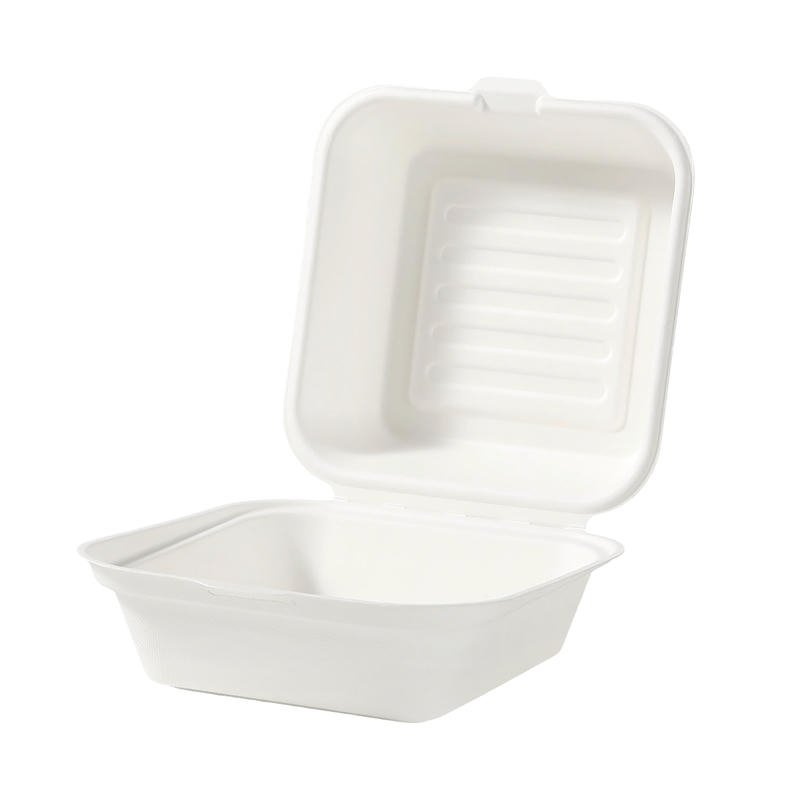
For restaurants considering biodegradable food packaging, those everyday details deserve a proper trial. ReGreen’s 6-inch hamburger box is one option to put through that process. Take a sample through your normal service routine and see what happens between the grill and the first bite.
Start with a finished burger
An empty box on a counter tells you very little about fit.
Prepare a burger exactly as you would for a customer. Use the normal bun, toppings, sauce and wrapper. If your menu includes a taller version, test that separately rather than assuming one successful fit covers everything.
Place the burger inside and close the box without pushing down on the food. Open it again and look for anything caught near the edge. Check whether the top of the burger touches the lid or whether the wrapper prevents a clean closure.
Ask for the box’s usable internal dimensions if you need a clearer comparison. The “6-inch” name helps identify the product, but your finished meal is the more useful test.
Put the sample where staff will use it
Now try the box at the packing station.
Place a small stack where the packaging would normally sit. Ask a team member to take a box, add the wrapped burger, close it and apply the usual order label.
Watch the sequence without stepping in immediately. Does the person have enough room? Is the stack easy to reach? Do they need to move the burger after placing it inside?
Ask what felt awkward. Sometimes the issue is the container; sometimes the station simply needs a better arrangement. A sample trial gives you a chance to find out before everyone has to work around the problem.
Use your normal wrapper
The wrapper and container should be assessed together.
Try your usual fold first. Loose paper can catch near the opening, while a tightly folded wrapper may change how the burger sits inside the box. Check whether the customer can lift the food out comfortably.
If you use different wrappers for different burgers, test each arrangement. A setup that works for a standard burger may behave differently with extra sauce or a larger bun.
Change one thing at a time if the result needs improvement. Adjust the fold, repeat the trial and compare the outcome. You will learn more that way than by changing the wrapper, burger position and packing method together.
Reproduce the wait before collection
Some customers collect their food immediately. Others arrive after the order has spent several minutes on a shelf.
Pack a sample and leave it for a period that reflects your usual collection routine. Then open it and check the bun, the wrapper and the area beneath the burger.
Record what you see. A short note such as “wrapper caught at the front” or “burger shifted to one side” is more helpful than simply writing “packaging failed.”
Repeat the trial if you change the arrangement. The purpose is to find a method your team can use consistently during an ordinary shift.
Test the whole takeaway bag
A burger box usually shares a bag with something else.
Pack a complete order using your usual side containers, sauces and other items. Check whether the burger box sits level and whether heavier items press against it.
Carry the bag as a customer or driver would. Set it down, pick it up and open it after a realistic holding period. If you offer delivery, include the normal delivery bag in the trial.
Do not add artificial rough handling just to make the test demanding. Reproducing everyday conditions will give you more useful information about the order your customer receives.
Make the opening easy to understand
Before the sample reaches the person testing it, apply the labels used during service.
Can they identify the order without turning the box over? Does a sticker cover the opening? Can they open it while keeping the meal steady?
These are small details, but they shape the customer’s first impression. Give the sample to someone who did not pack it and ask them to open it naturally. Watch where they hesitate.
Keep the successful method simple
ReGreen’s biodegradable food packaging range gives buyers several product categories to explore, but each item still needs to suit its intended meal and handling routine. Your sample observations apply to the setup you tested.
Once the 6-inch hamburger box works with your burger, record the packing method. Note the wrapper fold, burger position, label placement and arrangement inside the bag. A photograph can help staff reproduce it.
Keep that guidance close to the packing station. When a recipe, wrapper or delivery routine changes, repeat the relevant check. The result is a packaging choice supported by the way your restaurant actually serves food.